
The Real Reason Your Photos Haven't Improved in Years
Have you been photographing for years? Maybe owned several cameras - DSLR, mirrorless… Maybe even upgraded from crop sensor to full frame…
You’ve learned the exposure triangle. You watched tutorials on composition. Maybe even spent time learning editing.
But when you travel somewhere incredible - a beautiful city, an amazing landscape, a vibrant street scene - your photos still look… average.
The moment you remember doesn’t appear in the photo. The scene doesn’t feel the same as when you experienced it. And sometimes the image doesn’t even look better than what your phone captured.
So naturally you start wondering…. Is it the camera? Do I need a better lens?
If you’ve been photographing for years and your travel photos still look average, there’s a good chance you simply learned photography the wrong way.
In this video I want to share four mistakes many photographers make when learning photography - and what to do instead.
And stay until the end, because I’ll show you a simple exercise that can completely change how you evaluate your own photos.
Mistake 1: Consuming Gear Content Instead of Studying Photography
One of the biggest traps photographers fall into today is confusing gear content with photography learning.
Most photography content online is about cameras: new features, new lenses, new upgrades.
So it’s easy to believe that improving photography means upgrading equipment.
But if you look at the history of photography, some of the most memorable images were not created with advanced cameras. They were created with great observation and timing.
Take Elliott Erwitt, one of my favorite photographers.
Look at his famous photo “California Kiss.” A couple kissing inside a car, reflected in the mirror. Or his photo from Provence, where a young boy sits on the back of a bicycle. Or the playful image of a man jumping in front of the Eiffel Tower.
None of these photos are famous because of the camera. They’re memorable because of the moment and the scene.
So instead of spending most of your time watching gear videos, try this:
Go to 500px. Click on Inspiration → Editor’s Choice. Pick one image that immediately catches your attention. Then ask yourself:
👉 What gives this photo visual impact? Is it the colors? The mood? The light?
👉 What emotion does it evoke? Is it the expression of a person? The interaction between people? The movement in the scene?
You can even check what camera and lens they used. Often it’s not nearly as sophisticated as people assume.
But the point is not to reverse-engineer the gear. The point is to train your eye. Because photography starts with recognizing a strong image.
Mistake 2: Learning techniques that don’t match the type of photography you actually do.
Travel photography is actually a very broad term.
During one trip you might photograph: people, landscapes, street scenes, architecture, events, animals, moving subjects, still subjects, outdoors, indoors…
So it’s not wrong to learn from specialists. Landscape photographers, wildlife photographers, portrait photographers - they all have valuable techniques.
But their priorities are very different.
For example, a landscape photographer might set up a tripod, compose carefully, and take time dialing manual settings while waiting for the perfect light.
A wildlife photographer often has a very clear goal: capture an animal that is far away.
They might use a long lens and burst 30 or even 50 frames of the same moment - and later choose the best one in post-processing.
But travel photography rarely works like that. When you travel, you might encounter dozens of different scenes in a single day.
Different subjects. Different light. Different environments.
Your challenge isn’t capturing one perfect subject, but learning how to recognize interesting scenes quickly, operate your camera quickly, choose the right subject quickly, and sometimes compromise when conditions aren’t perfect.
In other words, travel photography is much more about fast decisions than specialized techniques.
Travel photography often requires a completely different mindset compared to highly specialized genres.
Instead of optimizing for one subject or one technique, you’re constantly adapting to different scenes throughout the day.
And I’m curious about your experience.
What do you usually photograph when you travel?
Is it mostly:
people and street scenes
landscapes and nature
architecture and city scenes
or a mix of everything?
Let me know in the comments — I always find it interesting to see how different photographers approach travel.
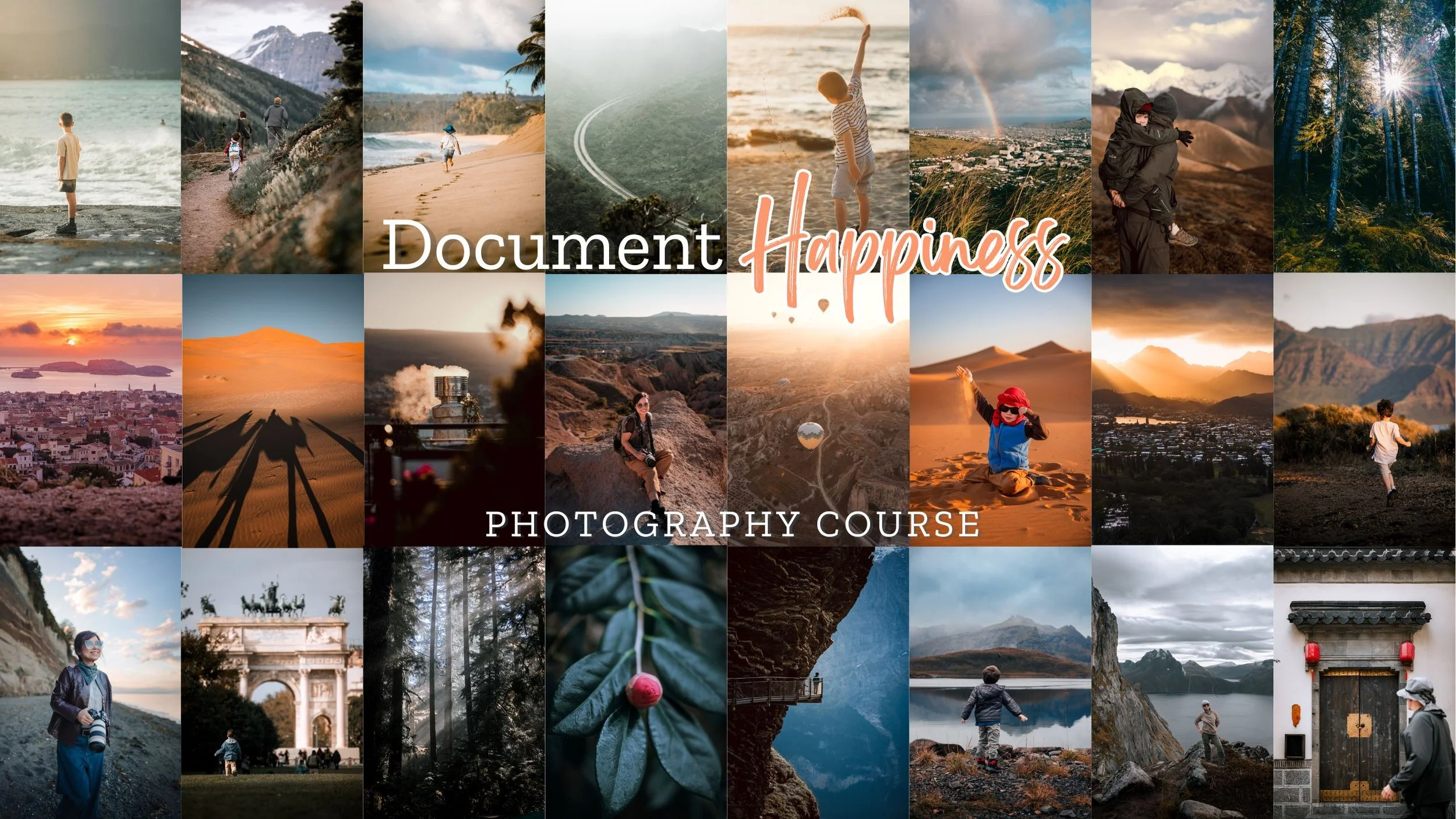
If you’re interested in learning how to make faster decisions in real-world travel scenes, that’s something I teach step-by-step in my course. Here’s the link if you want to explore it.
Mistake 3: Judging Photos Only by Technical Perfection
Another mistake many photographers make is evaluating photos primarily by technical quality.
Is it sharp? Is there noise? Is the exposure perfect?
And while these things matter, modern cameras - especially mirrorless cameras - already make technical perfection much easier.
The more important questions are different.
Instead of asking: Is this photo technically correct? Ask:
👉 Is it visually striking?
👉 Does it show something interesting?
👉 Does it make you feel something?
When those elements are present, viewers remember the photo — even if the image isn’t technically perfect.
And when they’re missing, even a perfectly sharp photo can still feel ordinary.
Mistake 4: Practicing the Wrong Way
The final mistake is learning photography passively.
It’s very easy to watch tutorials and think you’ve learned something. But real-world photography situations are much more complicated.
Many photographers only bring their camera when they travel. So when they finally arrive at a location, they try to apply everything they’ve learned all at once. Or even worse, you forgot what you’ve learned all along.
It’s like swallowing before chewing. You have to learn to walk before you run. The best way to improve is to practice one concept at a time. Master one thing first. Then build from there.
Bonus Tip
Here’s a simple exercise you can try that many photographers never do.
Pick one of your recent favorite photos. Then find a photo on 500px Editor’s Choice that you admire. Compare the two.
Now ask yourself two questions about the difference. And here’s the rule. Your questions cannot be about gear or sharpness.
Instead, ask things like:
👉 How did they get this mood?
👉 How did they capture this interaction?
👉 What time of day created this light?
👉 How did they choose this angle?
These kinds of questions train you to think about photography beyond equipment. And that’s where real improvement begins.
Let me leave you with one final thought. Most people don’t start photography with natural talent. But that doesn’t mean you can’t create great photos.
What really matters is learning photography in the right order. When you start focusing on:
👉 training your eye,
👉 recognizing strong images,
👉 making decisions quickly in real scenes,
👉 practicing with intention…
photography begins to make much more sense. And improvement becomes much faster.
Pin it 👇

You may also love…



The final part of our New Zealand journey covers Christchurch, Lyttelton Farmers’ Market, Kaikōura whale watching, Auckland, Waiheke Island, and Rangitoto Island.